Bridging the ABOR/IBOR Gap:
What Endowments and Foundations Operations Leaders Really Need
Discover how aligning the Accounting Book of Record (ABOR) and the Investment Book of Record (IBOR) can give endowments and foundations real-time clarity across public and private markets. Learn why this shift is key to reducing risk and improving decision-making.
The Reality for Endowment Operations Team
Managing investment operations in an endowment or foundation is a delicate balancing act. Teams are often small, yet they oversee increasingly complex portfolios that now include alternatives alongside public markets, leading to a surge in data, valuation methods, and reporting requirements.
The pressure is relentless. Investment offices and committees demand daily insights into exposures, liquidity, and a multitude of associated information, while boards and donors expect transparency. Auditors require precise reconciliations, all of which must be delivered timely despite the various formats of data received from multiple custodians and investment managers.
For investment operations teams, the challenge lies in managing enterprise-scale complexity often without the required bandwidth. It’s essential to focus on what operations teams need to succeed.
What Ops Leaders Need
Alignment between Accounting Book of Record (ABOR) and Investment Book of Record (IBOR)
No more misalignment between the “official” accounting book and the “working” investment book. The two must reconcile seamlessly, so finance and investment teams are speaking the same language.
Daily, Decision-Ready Data
Ops teams need more than quarterly closes or batch-driven reports. They need accurate daily visibility into exposures, liquidity, cash flows, and commitments — so the investment office can act with confidence in real time.
Forward-looking Transparency
Accounting records are essential, but investment operations must also anticipate what’s ahead: capital calls, distributions, unfunded commitments, and liquidity pinch points. This forward view is what enables true risk management.
Customizable Reporting
Boards, donors, auditors, and regulators all want information in different formats, often on short notice. Ops leaders need reporting that adapts to the audience, not rigid templates that force endless manual work.
A Partner that Understands Alternatives
Endowments and foundations manage complex, multi-asset portfolios where alternatives are only one piece of the equation. True partnership means understanding how private market investments fit within the broader ecosystem of public equities, fixed income, and real assets—and ensuring they’re all captured in a single, coherent reporting framework.
At Alter Domus, our strength lies not just in our alternative expertise but in how we integrate that knowledge across the full spectrum of holdings. We help investment teams achieve true total-portfolio visibility—connecting data from private funds, co-investments, and partnerships to the liquid exposures managed elsewhere.
The result is unified, institutional-grade reporting and governance that reflects the full reality of your portfolio. That integrated approach extends to how we collaborate with your existing partners.
Seamless Collaboration with Custodian Banks
We work closely with custodian banks to ensure that data and reporting flow smoothly across both public and private assets. Our systems and workflows are designed to complement custody platforms—enhancing, not duplicating, their capabilities.
For investment teams, this means maintaining established banking relationships while gaining a more complete and connected picture of portfolio performance. The result is a cooperative model that brings together the strengths of both worlds: the custodians’ scale and security with Alter Domus’ deep understanding of private markets.
The Challenge with Non-specialist Solutions
Many of the partners that serve endowments and foundations operate a model that was designed for traditional markets, excelling in equities and bonds but struggling with alternatives. Data silos hinder operations teams from achieving a unified portfolio view, and standardized reporting falls short of delivering the daily insights investment offices need.
Non-specialist solutions often overlook the complexities of private equity, private credit, hedge funds, and real assets. Capital calls, unfunded commitments, and bespoke valuations don’t fit into public market workflows, forcing teams to manually reconcile gaps and adapt templates for boards and auditors. For small endowment teams, these challenges lead to increased workload, risk, and confusion—contrary to the goals of ABOR and IBOR.
Aligning for Clarity and Control
For directors of investment operations, the challenge isn’t just more data — it’s delivering accuracy, timeliness, and transparency with small teams under mounting pressure.
That requires a model where ABOR and IBOR are aligned, reconciled, alternative-aware, and tailored to your governance needs.
When to migrate a private equity fund and how to do it
Alter Domus has supported a wide range of private equity fund migrations globally, building up a deep bank of internal expertise and track record that private equity managers can rely on when changing administrators.
In this guide Alter Domus shares its insights into why private equity firms are migrating funds in greater numbers and the technology and operational capabilities private equity firms are looking for when changing administrator.
October 2, 2025
The operating context for the private equity manager has completely transformed during the last decade and many firms are preparing to migrate their funds as a result.
Buyout firms are now managing US$4.7 trillion of assets and holding almost twice as many portfolio companies in their funds than in 2019, according toBain & Company figures.
With the buyout industry operating on a completely different scale than 10 years, the demands on the buyout back office have inevitably intensified. This not just because GPs are now responsible for shepherding a larger number of funds, shepherding bigger portfolios, and executing a higher volume of deals. Managers also have to comply with higher investor and advisor demands when it comes to the granularity and timeliness reporting.
The evolution of deal structures, which now include co-investments and continuation vehicle transactions, have placed further workloads on private equity operations, as have the increasing use of fund finance and the growth of the non-institutional investor base.
Time for a change: when to migrate funds
The increasing complexity and sophistication of the private equity business means that buyout managers are now facing an operational inflection point, where the relatively simple operating infrastructure that has served the industry so well for so long now requires an upgrade.
Similarly, long-standing outsourcing partnerships, where outsourcers were only required to provide quarterly fund reports, could now also require a refresh.
It is in this context that a series of trigger points are emerging for buyout managers to take the leap and migrate funds. This is not a decision to be taken lightly – fund migrations are complex, demanding projects that can be at risk of costing more and taking longer than anticipated – but many private firms are now approaching a point where delaying a migration can’t be put off any longer.
Why managers migrate funds
Poor service: As the demands on outsourcing partnerships have increased, there are more reports of private equity firms citing poor service delivery as a catalyst for migration. Fund administrators still running on legacy systems, using inflexible reporting templates and relying on manual processes have been unable to keep up with the reporting timelines and detail that private equity firms and their investors now expect. This in turn can lead to errors and delays. Managers will expedite migrations when incumbents can’t keep pace with evolving GP requirements, switching to administrators that have the tools and scale to stay ahead of increasing regulatory and reporting workloads.
Provision of scale: Deteriorating service levels can often be boiled down to a question of scale. Private equity managers have seen huge increases in assets under management (AUM) and in many cases simply outgrow the capacity of incumbent providers and have to move on to providers that have the bandwidth to grow with a manager over time and handle rising transaction volumes and a wider array of fund structures.
Keeping costs down: Private equity managers are facing the most challenging fundraising market since the 2008 financial crisis, with private equity fundraising down 17% year-on-year in H1 2025, according to PEIfigures. It has been essential, then, for private equity firms to run fund operations as efficiently and cost-effectively as possible and delivering value for money for LPs. Indeed, a Preqin survey found that well over a quarter of managers (29%) see pricing and fee transparency as a key catalyst for changing fund administration provider.
Up-tiering technology: The requirement to upgrade technology stacks and transition onto best-of-breed industry software packages will be a driver of fund migration for private equity managers, who are increasingly relying on fund administration partners to not only act as a provider of outsourced fund reporting services, but also a first point of contact for advice on the choice and implementation of technology. Preqin’s survey found that close to a fifth of managers change fund administrator because of technology.
How to choose a new fund administrator
The reasons that trigger a fund migration will also shape what a private equity manager wants from a new fund administration provider.
The ask will vary from manager to manager, depending on investor base, current gaps in in back-office operations, technology requirements and geographic footprint.
There are nevertheless a set of core themes that will inform fund administration selection in most cases:
Asset class expertise: Experience and track record in private equity matter. GPs will expect their fund administrator to have deep private equity expertise. Geographic reach is also important. GPs want fund administrators to be close to the specific LP communication, reporting and fund structure preferences in all key global markets, and to have teams on the ground where investors are active.
Exceptional technology and data capability: Technology is viewed as the single most valuable lever for making private equity back-offices more efficient and for meeting increasing investor demands. The sophisticated investors will have a firm working knowledge of the asset-specific software programs, including Allvue, eFront, Private Capital Suite (formerly Investran) and Yardi, and able to advise on the technology stacks suited to each client’s bespoke requirements. Managers also expect fund administrators to facilitate seamless integration and interoperability between the private equity firm’s core back-office infrastructure and third-party data providers. Fund administrators should also be able to implement cloud-native operating models, have an eye on the developments around self-service data for clients, and meet the highest cyber security standards and certifications.
Operational model flexibility: A change of fund administrator also opens an opportunity for private equity GPs to review operating models, and to transition to an operating model that best serves long-term growth ambitions and technical requirements. GPs will favor fund administrators that can provide operational flexibility, whether that be through a classic outsourcing arrangement, a co-sourcing model or a lift out.
Comprehensive regulatory knowledge: Keeping track of myriad regulatory developments across multiple jurisdictions has become increasingly challenging for private equity to sustain without support, especially for US managers operating in Europe and/or the United Kingdom. Managers are relying on fund administrators to be up to date on all key regulatory developments, range from the Alternative Investment Fund Managers Directive II (AIFMD II), Common Reporting Standard (CRS) and Foreign Account Tax Compliance Act (FATCA) to the Sustainable Finance Disclosure Regulation (SFDR), The General Data Protection Regulation (GDPR). Automated regulatory reporting and compliance is also becoming a more common ask, as managers look for ways to lighten the regulatory compliance burden.
Service excellence: Responsiveness and service excellence are a must for all GPs, who are now drafting detailed service level agreements (SLAs) with trackable key performance indicators (KPIs) around processing times and reporting accuracy. The best administrators will understand each client’s context and proactive when it comes to addressing client requirements.
A long-term partnership
When undertaking a fund migration, a private equity manager will want the relationship with a new fund administrator to be a long-term one. It is not in GP or LP interests to be constantly having to migrate funds.
As a fund administrator operating at scale Alter Domus has the resources and private equity-specific expertise to grow with clients, maintain excellent service levels and keep client platforms updated with the latest technological tools. We employ 6,000 professionals across 23 jurisdictions and administer US$3.5 trillion of assets and 36,000 client structures.
We have the scale, technology and industry knowledge to not only facilitate smooth fund migrations that cover the shifting requirements of the modern private equity manager but also put platforms and relationships in place that last for the long-term.
Discover how strengthening agency services helps private credit manager enhance transparency, mitigate risk, and ensure operational resilience across complex loan structures.
A Quiet Function with Outsized Impact
In private markets, operational infrastructure often sits in the background — until it fails. Among the most critical, and most overlooked, is the Agency. Far from a clerical role, the agent is the contractual backbone of loan agreements: keeping registers accurate, payments flowing, compliance monitored, and communications clear. Done well, the role is invisible; done poorly, it can cause disputes, delays, and reputational harm that ripple across every stakeholder.
Private Credit: Growth Brings Complexity
Private credit has grown into a core pillar of global finance. The U.S. Federal Reserve estimates the U.S. private credit market at USD 1.34 trillion as of mid-2024, with global totals nearing USD 2 trillion. J.P. Morgan notes it has expanded at roughly 14.5% annually over the past decade, making it one of the fastest-growing corners of alternatives.
This expansion has brought greater complexity. Facilities are now larger, more syndicated, multi-tranche, and frequently cross-border. With this scale, the margin for operational error narrows, and the Agency has become a strategic safeguard for transparency and trust.
The Shifting Demands of Private Markets
Ten years ago, private credit often meant bilateral loans or small club deals. Today, managers are navigating multi-currency, multi-jurisdictional facilities with heavy reporting obligations.
At the same time:
Investors and regulators expect more: Transparency and timely data are now baseline requirements.
Amendments and restructurings are common: Higher interest rates are testing borrowers, making flexibility and governance critical.
Operational resilience is scrutinized: Lenders demand confidence that data, payments, and records are accurate at all times.
The Agency has evolved from administrator to stabilizing force at the center of increasingly complex credit markets.
Getting Agency Services Right
To mitigate risks, managers must view the Agency not as a back-office utility but as a critical partner. The following areas are essential:
1. Independence and Impartiality
An Agency must act for all lenders equally, without bias. Independence ensures trust, especially during contentious votes or restructurings.
2. Accuracy as the Foundation
From payment flows to lender registers, precision is everything. The agent’s records are often the “source of truth” in disputes; they must be beyond reproach.
3. Proactive Compliance and Monitoring
Covenant oversight, reporting obligations, and regulatory checks cannot be reactive. A strong agent anticipates deadlines, flags risks early, and provides confidence that nothing is missed.
4. Event−Ready Expertise
Defaults, amendments, and restructurings are inevitable in today’s markets. The true test of an agent is how they perform under stress: fast, organized, and with continuity for all parties.
5. Technology−Enabled Transparency
In an era where stakeholders expect real-time access to information, portals and digital tools are essential. They transform the agent from a bottleneck into an enabler of transparency.
6. Scale with a Human Touch
Global coverage, certified processes, and scalable platforms matter — but so too does responsiveness. Managers should seek agents who combine infrastructure with service.
What Happens When Agency Fails
The risks of weak agency support are rarely visible until they become unavoidable. Consider the following scenarios:
Inaccurate registers leading to disputes over who holds voting rights during an amendment.
Delayed notices causing lenders to miss funding deadlines, damaging borrower relationships.
Weak default handling resulting in inconsistent lender communication and prolonged restructurings.
Regulatory missteps such as missed tax reporting or inadequate sanctions screening, creating compliance exposure.
Each of these outcomes not only disrupts individual deals but also undermines confidence in a manager’s operating platform. In a market where credibility is paramount, the stakes are high.
From Administrator to Strategic Partner
The best Agents are those whose presence is barely felt — not because their role is minor, but because they execute it flawlessly. In the fast-evolving world of private markets, where complexity and scrutiny are rising, the importance of getting agency services right cannot be overstated.
For managers, the choice of an Agent is not a back-office detail. It is a strategic decision that underpins trust with lenders, protects reputations, and ensures that operational resilience matches investment ambition.
Future-Proofing Governance: Building Operational Strength for Endowments and Foundations
Discover how future-proof governance can transform your endowment’s operations into a strategic advantage. See why strong oversight, scalable systems, and expert partnerships are essential for sustainable growth.
For directors of investment operations, governance is the foundation of effective portfolio management, accurate data, and risk control. In today’s landscape of rising regulatory demands and complex alternatives, strong governance is also a strategic asset.
Future-proof governance enables teams to move beyond reactive measures, creating resilient systems that enhance accuracy and credibility. This shift allows teams to focus on high-value tasks that drive portfolio success.
Raising Standards with confidence
Operational teams must deliver timely, precise data to boards, auditors, and regulators, facing higher expectations for transparency and risk oversight. For leaders, this is an opportunity to demonstrate that governance is a competitive advantage.
Robust processes foster confidence, reduce rework, and empower investment committees with better decision-making tools. At Alter Domus, we see organizations that strengthen governance not only meet current demands but also confidently explore new strategies and investment opportunities.
What Future-Ready Governance looks like in Practice
Future-proof governance is about strengthening operational infrastructure. For investment operations leaders, it means:
Resilient systems that maintain accuracy and continuity through staff turnover or market disruption.
Scalable processes that can handle the growing demands of alternatives – managing capital calls, monitoring liquidity, and tracking performance, etc – without adding headcount
Integrated reporting that provides a single version of the truth for boards, auditors, and investment committees.
Independent oversight that validates calculations, reduces operational risk, and enhances credibility with stakeholders.
With these pillars in place, governance supports efficiency and insight rather than slowing things down.
Outsourcing as a governance accelerator
Many endowments and foundations operate with lean teams, making it challenging to invest in the infrastructure required for governance at scale. Outsourcing fund administration provides a solution by reinforcing internal teams rather than replacing them. A strong partner like Alter Domus delivers:
Independent NAV and reconciliations, creating objectivity and reducing the risk of error.
Best-practice processes, refined across hundreds of institutional clients and seamlessly integrated into the operating model.
Technology-enabled transparency, giving operations leaders instant access to dashboards and reports without heavy internal investment.
Capacity relief, allowing teams to redirect time and talent toward strategic projects rather than manual processing.
In this way, outsourcing becomes a governance accelerator, embedding institutional-quality controls and reporting into organizations with leaner resources.
Tangible benefits for operations teams
When governance is strengthened through the right systems and partners, operations leaders see immediate, positive impacts. Audits proceed with greater speed and efficiency, requiring fewer adjustments and minimizing back-and-forth communication. This streamlining allows teams to concentrate on strategic initiatives rather than administrative burdens.
Board and committee reports become timelier and more insightful, establishing operations as a trusted source of decision-ready intelligence. This evolution enhances the quality of discussions and decisions at the highest levels.
Risk oversight improves, enabling proactive monitoring of exposures, cash flows, and liquidity across complex portfolios, fostering a culture of preparedness. As operational credibility increases so does trust from boards, donors, and external stakeholders. This strengthened relationship, built on transparency and reliability, lays a solid foundation for future collaboration and success, positioning organizations for sustainable growth.
Governance as an enabler of operational excellence
For directors of investment operations, future-proof governance means building a robust infrastructure that navigates today’s complexities while adapting to tomorrow’s demands. It minimizes risk, boosts efficiency, and empowers teams beyond back-office functions.
At Alter Domus, we specialize in helping endowments and foundations achieve this balance. By merging deep expertise in alternatives with advanced technology and independent oversight, we transform governance into a strategic asset. The outcome is a reliable data environment, clear reporting, and investment staff focused on strategy rather than reconciliations. In this context, governance becomes an enabler of operational excellence, key to sustaining efficiency and trust for the future.
Unlocking Capital Efficiency: Why Insurers Are Turning to Rated Note Feeders
Learn how Rated Note Feeders (RNFs) help insurers cut Solvency II capital charges and how Alter Domus supports RNF administration and compliance.
For European insurers, navigating Solvency II has never been simple. The framework, designed to ensure the sector remains resilient, has reshaped how insurers approach investment allocation. It forces them to hold significant capital buffers against certain asset classes, particularly private markets.
This creates a dilemma. On one side, private equity, private credit, infrastructure, and real asset strategies offer attractive yields and diversification potential in a low-interest-rate, volatile market environment. On the other, the capital charges attached to these investments—sometimes as high as 49% for unlisted equity—are prohibitively steep. For many insurers, this makes allocating to private funds a costly exercise in balance sheet inefficiency.
According to BIS data, insurance companies globally hold over $35 trillion in assets, around 8% of global financial assets, with a significant portion subject to regulatory capital requirements.
A growing search for structures that enable insurers to capture private market returns without absorbing heavy capital penalties. In recent years, Rated Note Feeders (RNFs) have emerged as one of the most effective solutions. They are transforming how insurers access alternatives, unlocking capital efficiency under Solvency II, and opening the door to wider private market participation.
Why Capital Efficiency Matters for Insurers
To appreciate the importance of RNFs, it is essential to understand the capital efficiency problem. Under Solvency II, insurers must hold capital in proportion to the perceived riskiness of their investments. This is measured through solvency capital requirements (SCR).
Listed equities: ~39% capital charge
Unlisted equities: ~49% capital charge
Investment-grade corporate bonds: Often between 7% and 12%
AAA-rated sovereign bonds: Close to 0%
These percentages matter. Skadden’s 2024 guide to Solvency II confirms the dramatic differential between capital charges for rated structured products (5-15%) versus direct private equity investments (49%), creating an opportunity cost of up to 34% in tied-up capital.
Capital efficiency, therefore, is not just a technical consideration. It directly affects:
Portfolio allocation: High charges discourage insurers from committing to certain asset classes.
Competitiveness: Efficient use of capital can differentiate one insurer’s financial strength from another’s.
Returns: The higher the capital requirement, the lower the effective return on capital invested.
Against this backdrop, any structure that can reduce solvency capital charges while maintaining exposure to private markets becomes extremely attractive.
What Are Rated Note Feeders?
Rated Note Feeders (RNFs) are specialized feeder fund structures that repackage private fund commitments into a blend of equity and rated debt instruments. Their innovation lies in how they translate inherently illiquid, high-capital-charge exposures into securities that qualify for more favorable regulatory treatment.
The mechanics:
Feeder structure: The RNF sits between investors and the master private fund.
Debt + equity mix: Instead of committing only through equity, insurers subscribe to rated notes (debt) and potentially a small equity component.
Credit rating: A rating agency evaluates the structure, expected cash flows, credit enhancements, and collateral, then assigns a rating.
Repackaging effect: Investors hold rated notes, which receive lower capital charges under Solvency II compared to direct equity interests.
RNFs can be applied across multiple private market strategies:
Private credit: Transforming loan portfolios into rated debt notes.
Private equity: Allowing exposure without the full equity capital charge.
Infrastructure funds: Matching long-term liabilities with long-dated, rated notes.
BIS research indicates that insurance companies using rated note structures have successfully increased their private market exposure without compromising solvency positions, a key factor driving their growing popularity.1
For insurers, RNFs represent a bridge: they provide access to the same underlying private market exposures, but with far more efficient treatment on their balance sheet.
How RNFs Drive Capital Efficiency Under Solvency II
The power of RNFs becomes clear when comparing SCR requirements. Consider two scenarios:
Scenario 1: Direct fund commitment
An insurer commits €50 million to a private equity fund. With a 49% capital charge, they must allocate nearly €25 million in regulatory capital to support this investment.
Scenario 2: Commitment via RNF
The same insurer invests €50 million via a Rated Note Feeder structured as a BBB-rated note. Depending on the rating, the capital charge could be reduced to 9–15%. The capital requirement now falls to as low as €4.5–7.5 million.
The difference is profound: RNFs free up regulatory capital, enabling insurers to deploy resources more effectively across their portfolio.
Beyond the immediate reduction in capital charges, RNFs offer additional advantages:
Broader diversification: Lower charges allow insurers to allocate to more funds or strategies.
Alignment with liabilities: Rated notes can be structured to match insurers’ liability profiles.
Regulatory comfort: By relying on independent credit ratings, RNFs create transparency and defensibility in the eyes of regulators.
The Operational Complexities of RNFs
Despite their benefits, RNFs are not simple plug-and-play structures. They involve layers of operational and regulatory complexity that require specialized expertise.
Dual capital calls: RNFs must coordinate calls from both the master fund and noteholders, ensuring liquidity is managed effectively.
Cash flow modeling: Accurate forecasting is critical to satisfy rating agencies and maintain credit ratings.
Note servicing: Issuing, monitoring, and paying interest or principal on notes requires robust infrastructure.
Rating agency oversight: Ongoing engagement with rating agencies, including data provision and performance updates, is mandatory.
EU Securitisation Regulation compliance: RNFs must adhere to detailed rules on risk retention, transparency, and due diligence.
Reporting complexity: Detailed, often bespoke reporting is required to satisfy both investors and regulators.
Without the right operating model, these complexities can create significant risk. Errors in servicing, miscommunication with rating agencies, or regulatory missteps could undermine the efficiency gains RNFs are designed to deliver.
How Alter Domus Simplifies RNF Implementation and Management
To make RNFs practical, insurers, and asset managers increasingly turn to specialized partners who can take on the heavy lifting. Alter Domus has developed a service suite specifically tailored to the demands of RNFs.
Key areas of support include:
End-to-end fund administration: Managing investor commitments, processing dual capital calls, and reconciling cash flows.
Compliance and regulatory reporting: Ensuring adherence to Solvency II, EU Securitisation Regulation, and other applicable frameworks.
Note servicing: Handling issuance, payments, record-keeping, and investor communications.
Rating agency coordination: Supporting the initial rating process, ongoing performance updates, and re-rating cycles.
Distribution and investor relations: Facilitating communication with insurers and other noteholders.
Technology-enabled transparency: Leveraging platforms that provide real-time data and reporting dashboards.
Alter Domus combines global reach with local expertise. Having worked with some of the world’s largest insurers and alternative asset managers, we bring practical experience in structuring, administering, and optimizing RNFs through our specialized private debt solutions and private equity fund solutions. For insurers, this translates into smoother implementation, fewer operational headaches, and confidence that the structure will deliver on its promise of capital efficiency.
Conclusion: Unlocking Capital Efficiency Through RNFs
The investment landscape for insurers is shifting. Regulatory pressure is unlikely to ease, and the hunt for yield in private markets continues to intensify. In this environment, capital efficiency is no longer a technical footnote—it is central to strategy.
Rated Note Feeders are emerging as one of the most effective tools to address this challenge. By transforming private market exposures into rated debt instruments, RNFs lower solvency capital charges, broaden access to alternatives, and align investments more closely with insurers’ liability-driven needs.
But success with RNFs is not guaranteed. Their complexity demands deep knowledge of fund structuring, regulatory compliance, and operational execution. The right partner can make the difference between a structure that delivers efficiency and one that creates friction.
For insurers ready to navigate Solvency II more effectively, RNFs represent an opportunity to unlock capital efficiency and expand into private markets with confidence. With expert support, they are not just a niche innovation—they are a cornerstone of the future insurance investment landscape.
Disclaimer: THIS MATERIAL IS PROVIDED FOR GENERAL INFORMATION ONLY, DOES NOT CONSTITUTE INVESTMENT ADVICE, AND PAST PERFORMANCE IS NOT INDICATIVE OF FUTURE RESULTS.
Insights
AnalysisApril 1, 2026
When Borders Become Background: Operating Across Jurisdictions
CFO Structures Explained: Bringing Transparency to a Complex Capital-Raising Tool
Learn how Collateralized Fund Obligations (CFOs) provide NAV liquidity and capital efficiency in private markets, and how Alter Domus enables execution.
Collateralized Fund Obligations (CFOs) have re-emerged as sophisticated capital-raising instruments at the intersection of private markets and structured finance. This resurgence reflects both private market managers’ search for liquidity solutions and institutional investors’ appetite for rated exposure to alternative assets.
CFOs serve as critical bridges between private equity fund managers seeking flexible capital and institutional investors requiring rated securities. As traditional financing avenues face pressure from sustained elevated interest rates, these structures have evolved from niche instruments to mainstream financing tools for sophisticated asset managers.
What are CFOs?
Collateralized Fund Obligations represent securitized portfolios of private fund interests, typically packaged into special purpose vehicles (SPVs) that issue tranched debt and equity securities. At their core, CFOs transform relatively illiquid limited partnership interests into structured products with varying risk-return profiles.
The fundamental architecture involves:
Asset Pool: A diversified collection of fund interests spanning private equity, private debt, or other alternative assets.
Tranched Capital Structure: Typically featuring senior notes (AAA/AA/A), mezzanine tranches (BBB/BB), and equity components.
Cash Flow Waterfall: Predetermined distribution hierarchy prioritizing senior tranches.
Rating Agency Oversight: Independent risk assessment from agencies like KBRA, Moody’s, and S&P.
The tranched structure creates investment options suitable for different risk appetites. Investment-grade senior notes appeal to insurance companies and pension funds, while subordinated tranches attract yield-focused investors comfortable with higher risk.
The equity piece typically remains with the sponsor or dedicated alternative investors seeking enhanced returns.
Why Sponsors Use CFOs to Unlock Capital
For private market managers, CFO structures provide multiple strategic advantages in today’s capital-constrained environment. One of the most significant benefits lies in their NAV financing capabilities.
According to Preqin’s Global Private Equity Report, private equity assets under management are projected to double from $5.8 trillion at the end of 2023 to approximately $12 trillion by 2029, reflecting sustained institutional confidence in alternative investments despite moderating growth rates.
Another advantage is capital recycling efficiency. By securitizing mature fund positions, managers can accelerate the return of capital to limited partners while still preserving potential upside.
CFO structures also expand investor access. By transforming alternative investments into rated securities, they make these products accessible to a wider base of regulated institutional investors.
Key Mechanics: How CFO Structures Work
Executing these mechanisms efficiently often requires fund administration services and fund regulatory reporting services to manage accounting, compliance, and investor reporting across underlying fund interests.
Similarly, tailored private equity fund solutions and private debt fund solutions help optimize structuring, NAV management, and investor communications.
SPV Structure: The securitization process begins with establishing a special purpose vehicle that acquires the fund interests. This legal separation creates bankruptcy remoteness and enables the issuance of rated securities backed by the underlying portfolio.
Tranching Process: The capital structure typically includes:
Senior Secured Notes (60-75% of capital structure)
Mezzanine Notes (10-20% of capital structure)
Subordinated Notes/Equity (15-25% of capital structure)
Waterfall Distributions: Cash flows cascade down the tranches in a predetermined order, with senior noteholders getting principal and interest first. This is what gives senior securities investment-grade ratings.
Coverage Tests: Ongoing monitoring includes overcollateralization and interest coverage tests. These mathematical fences protect senior investors by siphoning off cash from junior tranches if the portfolio’s performance falls below certain thresholds.
Reinvestment Period: Most structures have a 2-4 year reinvestment period during which the manager can recycle capital from realizations into new fund commitments, subject to eligibility criteria and portfolio constraints.
Liquidity Facilities: To manage timing mismatches between fund cash flows and payment obligations, CFOs often include revolving credit facilities that provide short-term liquidity between distribution periods.
Challenges: Transparency, Ratings, and Reporting
Despite the benefits, CFOs present operational complexities that require special expertise to navigate.
Private markets are opaque. Private fund interests have irregular valuation periods, non-standard performance metrics, and limited secondary market price discovery. This opacity is a challenge for rating agencies, which have to assess credit quality with less frequent and standardized data than in traditional structured finance.
Disclosure restrictions add to the challenge. Limited partnership agreements often have confidentiality clauses that restrict position-level disclosure. Structuring teams have to create information frameworks that meet rating agency requirements while respecting contractual constraints.
Regulatory frameworks add another layer of complexity, with transatlantic divergence creating particular challenges for global managers. EU regulations (Securitisation Regulation and AIFMD) have different risk retention and disclosure requirements than US frameworks (Regulation AB and Dodd-Frank).
Unlike corporate bonds or mortgages, private equity distributions follow non-linear patterns driven by exit timing, recapitalisation, and manager discretion. Modelling these cash flows requires advanced forecasting capabilities that combine quantitative analysis with qualitative judgement.
How Alter Domus Delivers CFO Success
The operational infrastructure required to support the CFO goes beyond traditional fund administration. As CFOs have become more complex, savvy managers recognize that execution excellence requires a partner with private markets knowledge and structured finance expertise.
Alter Domus has become a market leader in this space, having closed over 35 CFOs across North America and Europe. This track record reflects the firm’s integrated approach to managing these complex instruments throughout their lifecycle.
At the foundation is a fund-of-funds accounting expertise. Unlike traditional funds, CFOs require multi-layered accounting frameworks that track cash flows from underlying investments through the SPV and ultimately to security holders. This means specialized systems that can handle the accounting nuances at each level—from recognizing distributions and valuing fund positions to calculating payment obligations across the tranched securities.
The waterfall calculation engine is perhaps the most critical component. These algorithms manage the priority of payments with institutional-grade precision, so cash is distributed exactly as per indenture. The complexity of these waterfalls increases exponentially when you add features like PIK (payment-in-kind) interest, coverage test remediation and reinvestment criteria.
We offer fund administration services, fund regulatory reporting services, and specialized private equity and private debt fund solutions, ensuring that complex NAV calculations, cash flow waterfalls, and reporting obligations are managed accurately and efficiently.
If you’re considering a CFO structure, this operational foundation doesn’t just support execution—it gives you an edge. By outsourcing the complexity to a partner with private markets knowledge and structured finance expertise, you can focus on portfolio and investor relationships.
Conclusion
Collateralized fund obligations are powerful but complicated capital-raising tools for private market managers. When done right, they create win-win outcomes for sponsors looking for flexible liquidity, investors looking for rated exposure to alternatives, and limited partners looking for accelerated recycling.
The market is accelerating, with innovation in underlying assets, structure, and investor engagement models. CFOs will become more common in alternative investments as private market NAV keeps going up through 2025 and beyond.
But they are complicated. The operational intricacies of fund securitization require partners with in-depth experience in private markets, structured finance, and regulatory frameworks. With the right guidance, these instruments can go from complicated to a strategic advantage for sophisticated players.
Disclaimer: THIS MATERIAL IS PROVIDED FOR GENERAL INFORMATION ONLY, DOES NOT CONSTITUTE INVESTMENT ADVICE, AND PAST PERFORMANCE IS NOT INDICATIVE OF FUTURE RESULTS.
Insights
AnalysisApril 1, 2026
When Borders Become Background: Operating Across Jurisdictions
Explore how tech is reshaping fund administration through automation, APIs, and smart ops. Discover what GPs and COOs should prioritize in 2025.
The investment landscape has shifted dramatically, with fund administrators facing rising investor expectations, regulatory complexity, and market volatility. Traditional approaches no longer suffice.
Investors now demand greater transparency, faster reporting, stronger security, and lower fees—making technology the key differentiator between administrators that thrive and those that fall behind.
Most wealth managers already rely on digital platforms—94% of firms with $500M+ in assets and 61% of smaller firms use fintech to improve client engagement and efficiency.1 The question is no longer whether to adopt new technology, but how quickly and effectively it can be deployed to transform operations.
How Technology Is Transforming Fund Administration
From spreadsheets to smart systems
The journey from manual processes to intelligent automation represents perhaps the most significant shift in fund administration technology. Historically, fund administrators relied heavily on spreadsheets and manual data entry—approaches that were not only time-consuming but prone to human error.
Modern fund administration technology has evolved to replace these outdated methods with integrated systems that automate routine tasks. Advanced platforms now handle everything from NAV calculations to investor communications with minimal human intervention. This transition eliminates the bottlenecks associated with manual processing while dramatically reducing error rates and improving overall efficiency.
Digitization of workflows and document handling
Document management has traditionally been one of the most labor-intensive aspects of fund administration. The digitization of workflows and document handling represents a quantum leap forward, enabling administrators to process, store, and retrieve critical information with unprecedented speed and accuracy.
The benefits extend beyond mere efficiency. Digital workflows create audit trails that enhance compliance and security while reducing the risk of document loss or unauthorized access. For fund managers and investors alike, this translates to greater confidence in the integrity of administrative processes.
Role of APIs in real-time data sharing
Application Programming Interfaces (APIs) have revolutionized how fund administration systems interact with each other and with external platforms. By enabling seamless data exchange between previously siloed systems, APIs create a connected ecosystem that supports real-time information sharing and processing.
This connectivity allows fund administrators to integrate with banking platforms, trading systems, and investor portals, creating a unified experience for all stakeholders. Rather than waiting for batch processing or manual reconciliations, information flows continuously between systems, enabling near-instantaneous updates and reporting.
Benefits for GPs and Operations Teams
The power of RNFs becomes clear when comparing SCR requirements. Consider two scenarios:
Faster, more accurate investor reporting
Perhaps the most tangible benefit of fund administration technology is the transformation of investor reporting. Traditional reporting cycles often stretched over weeks, with manual data collection and verification creating significant delays. Today’s technology-enabled administrators can compress these timelines dramatically, delivering accurate reports in days or even hours. 81% of clients using fintech platforms in 2025 report higher satisfaction from greater transparency and easier access to investment data.1
This acceleration doesn’t come at the expense of quality. In fact, automated data processing and validation actually enhance accuracy by eliminating human errors and ensuring consistent application of accounting principles. Whether you’re a venture capital fund administration or managing traditional vehicles, digital tools compress reporting cycles from weeks to hours.
Improved scalability for fund growth
Traditional fund administration models faced inherent limitations when it came to scaling operations. Adding new funds or investors typically requires proportional increases in staffing and resources, creating operational challenges and cost pressures during periods of growth.
Modern fund administration technology breaks this linear relationship between growth and resource requirements. Cloud-based fund administration services can scale elastically as you grow—from managing a single fund in-house to migrating fund admin activities to a third-party platform. This enables administrators to support fund managers through growth phases without service disruptions or quality compromises.
Better risk management and compliance readiness
The regulatory landscape for investment funds continues to grow more complex, with new requirements emerging across jurisdictions. Fund administration technology has evolved to address this challenge through automated compliance monitoring and regulatory reporting capabilities.
Advanced systems now use regulatory rules engines to continuously monitor transactions and positions, flagging potential compliance issues early for proactive remediation. This reduces risk and workload for operations teams, replacing manual tracking and sampling with automated, comprehensive monitoring.
Comparing Traditional vs. Tech-Enabled Models
Manual bottlenecks vs. automated efficiency
The contrast between traditional and technology-enabled fund administration is clearest in operational bottlenecks. In conventional models, tasks like month-end reconciliations, NAV calculations, and investor distributions often create backlogs demanding all-hands-on-deck efforts.
Tech-enabled administrators remove these bottlenecks through automation. Reconciliations that once took days now finish in hours or minutes, with only exceptions flagged for review. NAV runs on set schedules with little manual input, and distributions flow through straight-through processes.
This shift goes beyond speed—it reshapes fund administration. Instead of routine data processing, teams now focus on exception handling, client relationships, and value-added analysis.
Fragmented systems vs. integrated platforms
Traditional fund administration relied on separate systems for accounting, investor services, compliance, and reporting, leading to integration issues, data inconsistencies, and poor user experiences.
Modern platforms take an integrated approach, spanning all functions to ensure data consistency, streamline workflows, and deliver a cohesive experience. With all data stored in a single ecosystem, administrators can produce comprehensive reports and analytics without the transformation challenges of fragmented systems.
What to Look for in a Technology-Forward Partner
Infrastructure maturity, flexibility, and security
When selecting a fund administrator, prioritize technology infrastructure. Leading partners invest in enterprise-grade platforms that combine reliability, flexibility, and strong security.
Mature infrastructure ensures uptime, processing power, disaster recovery, and robust change management to prevent disruptions. Flexible platforms support diverse fund types, complex structures, and a wide range of asset classes, including alternatives.
Security is critical amid rising cyber threats. Top administrators deploy encryption, multi-factor authentication, access controls, and continuous monitoring, while maintaining SOC 2 and ISO 27001 compliance.
Ability to scale with complex fund structures
As investment strategies grow more sophisticated, fund structures have become increasingly complex. When considering In-house vs third-party fund administration, look for providers whose platforms already support complex structures like master-feeder and venture capital fund administration.
These systems also scale to diverse investor needs, managing varied fee arrangements, tax treatments, reporting requirements, and side letters, ensuring all investor-specific provisions are accurately implemented and documented.
Conclusion
The technological revolution in fund administration represents both a challenge and an opportunity for investment managers. Those who partner with technology-forward administrators gain significant advantages in operational efficiency, investor satisfaction, and regulatory compliance.
As we look toward the future, tech like AI and machine learning will continue to enhance automation capabilities, while blockchain[1] and distributed ledger technologies may fundamentally transform transaction processing and verification. Data analytics will grow more sophisticated, providing deeper insights into portfolio performance and investor behavior.
For fund managers navigating this evolving landscape, the choice of a fund administration service provider has never been more consequential. By selecting providers with robust, flexible technology platforms and demonstrated commitment to innovation, they can ensure that their administrative capabilities remain aligned with their strategic ambitions—today and into the future.
Disclaimer: THIS MATERIAL IS PROVIDED FOR GENERAL INFORMATION ONLY, DOES NOT CONSTITUTE INVESTMENT ADVICE, AND PAST PERFORMANCE IS NOT INDICATIVE OF FUTURE RESULTS.
Insights
AnalysisApril 1, 2026
When Borders Become Background: Operating Across Jurisdictions
Exchange-traded funds (ETFs) composed of collateralized loan obligations (CLOs) have grown significantly in recent years. The underlying CLOs consist primarily of senior secured broadly syndicated loans (BSLs). Although retail investors have had access to BSL funds for over 30 years through open-ended leverage loan mutual funds and for over a dozen years through ETFs, the first publicly traded CLO ETF was launched only in 2020. Prior to this development, CLO investments were predominantly made by institutional investors. This is particularly noteworthy given that historically anywhere from a half to up to two-thirds or more of the US BSL market are held by CLOs[1].
This paper examines the performance of a sample of publicly traded CLO ETFs based on historical returns. The sample encompasses various CLO ETFs that target a range of tranche seniorities, reflecting different levels of credit risk as indicated by their ratings. Additionally, the performance of BSL ETFs, from which we selected a sample, is considered to provide a reference point, given that a CLO tranche is fundamentally a derivative of its underlying BSL portfolio.
Our analysis of the historical daily returns and correlations of the ETFs indicates that over a longer period (such as two years), the risk/return characteristics amongst the ETFs are generally consistent with the underlying risk profile of the relevant ETF – i.e. similar performance levels for similar risks – and moderate correlations. However, an examination of daily CLO ETF returns and correlations over a short volatile period can exhibit a noticeable divergence in absolute and relative performance. These findings indicate that the ‘intuitive’ view that CLOs and BSLs are highly correlated may not be evident until there is significant market volatility. And even in that case, differences in performance indicate that other factors may be at play.
Our analysis found that CLO correlations may be further explained at times by vintage and underlying asset manager exposure rather than just broader BSL market dynamics. We offer additional insights and key factors that can impact the performance between CLO portfolios.
Historical Returns – Data
Our sample of CLO ETFs spans the range of tranche seniorities and the credit ratings scale – from CLO ETFs that focus primarily on senior tranches (rated primarily Aaa) to those that focus on investment grade mezzanine tranches (rated from Aa to Baa). And even to those that include some speculative grade tranches (Ba). Our study also considers BSL ETFs to acknowledge that CLOs are derivatives of the BSL market.
In this context, the relationship between CLOs and the underlying BSL market could provide additional insight into the performance of CLOs. We also included some other market related ETFs to gain additional insight as to the performance of the BSL and CLO markets relative to the broader capital markets. Thus, the selected ETFs can be grouped into three categories: BSL, CLO and other broader markets.
BSL Category
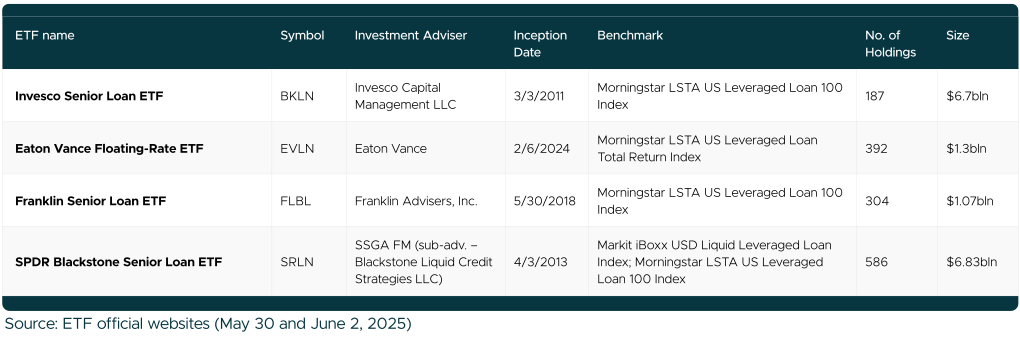
We selected four BSL ETFs that are managed by well-established asset managers and have benchmarks to broad BSL indices.
Table 1: List of BSL ETFs
CLO Category (BSL-Derived)
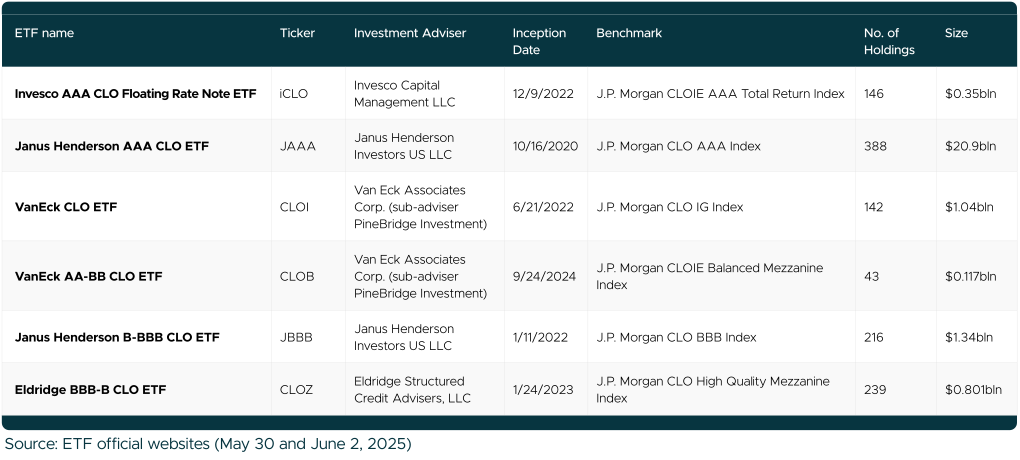
We selected a variety of CLO ETFs that invest in CLO tranches across the CLO capital structure, and with investments in CLOs across a range of vintage periods and asset managers.
Table 2: List of CLO ETFs
Understanding the underlying ratings distributions gives further insight into the level of exposures a CLO ETF has within a typical CLO capital structure. The CLO portfolios within our sample cover a range of credit risk exposures – from a fund with essentially 100% Aaa to other funds with a broader representation of investment-grade ratings as well as funds with concentrations of Baa/Ba credit risk[2].
Other Broader Markets Category
We also included ETFs that can provide additional perspective on the relative performance of the BSL and CLO markets to the broader capital markets.
In this context, we selected a small cap equity ETF (IWM) since many BSL borrowers would fall in the small cap category; a high yield bond ETF (HYG) since these issuers have a similar credit risk profile (though with different recovery rate and interest rate risks) as compared to BSLs; and a short-term Treasury fund ETF (VGSH) to provide some benchmark of shorter-term risk-free interest rates.
Looking at Financial Performance
We focused on the risk-return and correlation characteristics across the ETFs. We looked for insights into how the ETFs performance behaved with one another within the same category (‘intra-category’), and across categories (‘inter-category’) over different time periods. We observed that both intra-category and inter-category performance and correlation metrics depended heavily on which period we selected. We found that during the most recent market volatility (April 2025), patterns emerged that were not so evident during calmer periods.
In some cases, the correlations we observed between the BSL and CLO ETFs were not as consistent as expected. Understanding that CLOs are derivatives of the BSL market, we initially expected to see a relatively higher degree of correlation across all market environments, but the correlations across all market environments varied. This observation suggests that not all CLOs track the same broad ‘BSL market’.
We also found that CLO performance could be influenced by unique factors related to range of vintage periods of when the underlying CLOs were issued and the overall exposures to common CLO asset managers.
These findings show that these variations across CLO portfolios can offer an opportunity for CLO investors to diversify their BSL and BSL-derivative portfolios to better optimize their specific risk-return objectives. In other words, not all BSL and CLO ETFs are alike.
Historical Performance – ‘Normal Times’
We chose two distinct historical return periods to begin our comparative analysis. One that we could classify as a ‘normal’ period and the other as a ‘volatile’ one. We chose the month of April 2025 as the volatile period. This period reflected significant market volatility due to the rapidly changing global trade outlook and economic uncertainties associated with the related US tariff announcements.
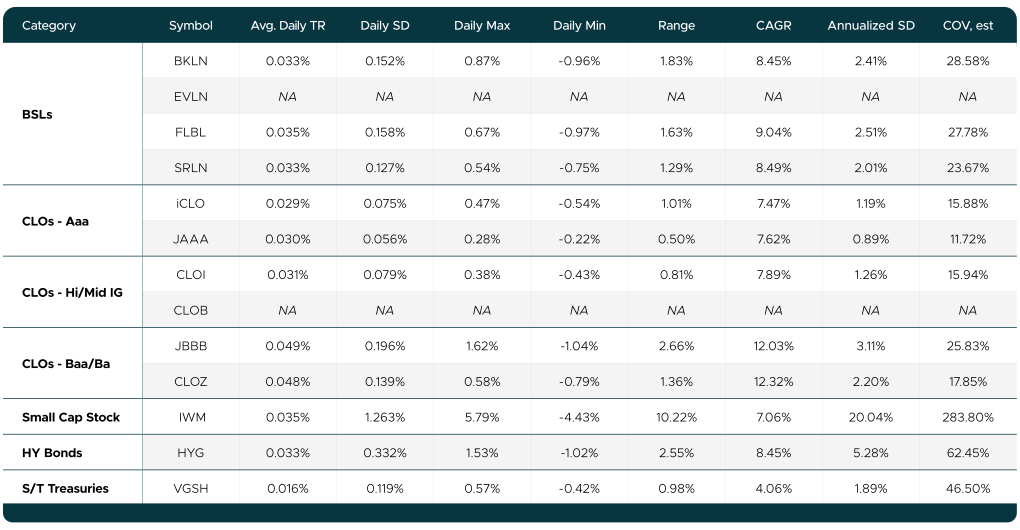
We selected the two-year period from April 2023 through March 2025 as a proxy of ‘normal market conditions’ and can be considered somewhat as a benchmark. Exhibits 1 and 2 show the historical return statistics and correlations of daily returns for each of the ETFs, respectively. Note that two of the ETFs in our sample were not in existence for the full two year-period analyzed. Thus, summary stats are not available, and correlation stats apply only for the respective period that each of these two ETFs was in existence.
We note that the return and risk characteristics across the ETFs are generally as expected within each investment category and subcategory. For example, among the BSL ETFs we note that there is no material distinction among the standard deviations and coefficients of variation. Among the CLO ETFs, the riskier CLO ETFs with lower rated tranches show higher volatility and coefficients of variation as compared to those CLO ETFs with higher rated tranches. The high yield bond ETF was the most volatile among the credit-sensitive ETFs. As expected, the small cap stock ETF was the most volatile while the short-term Treasury ETF was the least.
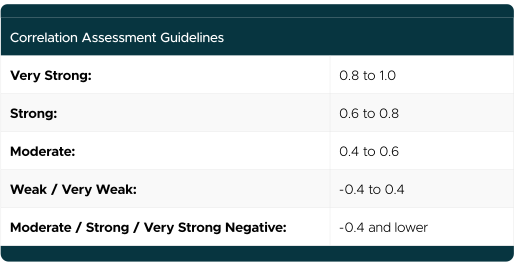
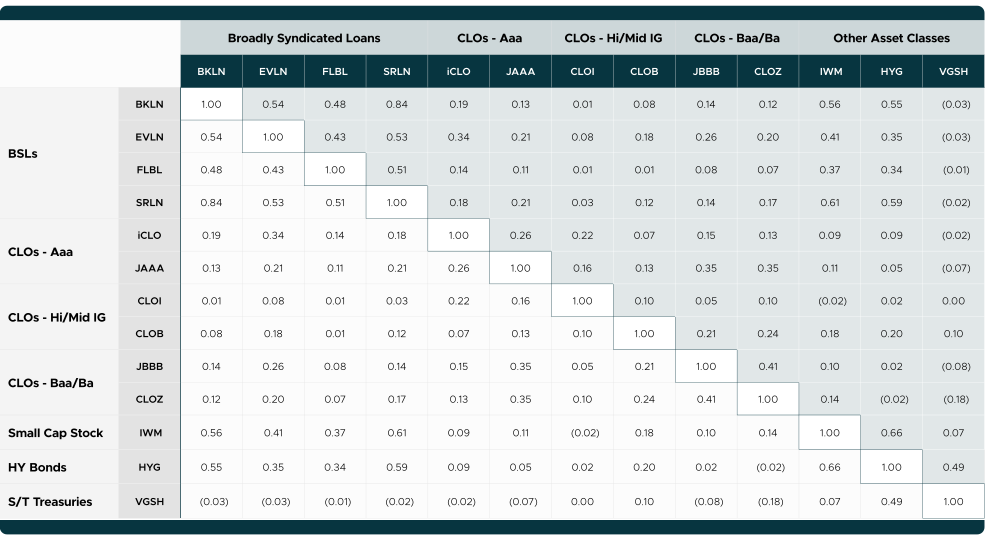
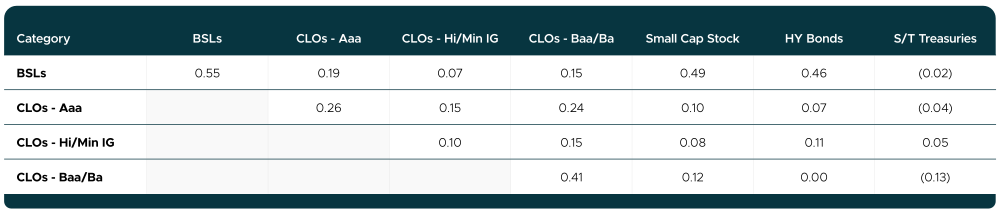
Exhibit 3 summarizes the cross-category correlations of historical daily returns. These are based on simple averages of correlations amongst the ETFs within their respective categories. The text box on the right provides guidelines for assessing the correlation results presented in this paper.
During ‘normal times’ NONE of the observed correlations were assessed to be Strong or Very Strong. All the correlations were assessed to be in the Moderate and Weak/Very Weak categories. Only 4 of the 22 observed correlations were assessed as Moderate while the remaining 18 were Weak / Very Weak. Three of the four that were Moderate, were related to the BSL category – BSLs to: BSLs, HY Bonds, and small cap stocks, respectively.
These observations suggest that during normal times, the correlations were not particularly significant for the CLO ETFs. Furthermore, CLO performance did not appear to be materially correlated to other credit risk assets, including the BSL market. Even within the CLO category, correlations were relatively marginal across the CLO capital structure, which suggests that movements in CLO tranche risk premiums seem to be more idiosyncratic during stable markets. These results are not surprising given that the CLO tranches are supported with credit enhancement – unlike CLO equity tranches, which we would expect to be more sensitive.
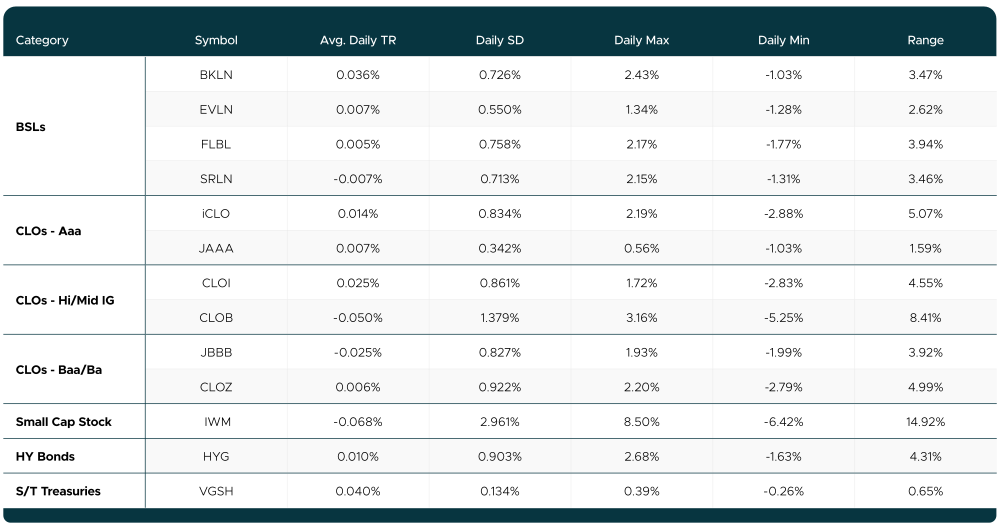
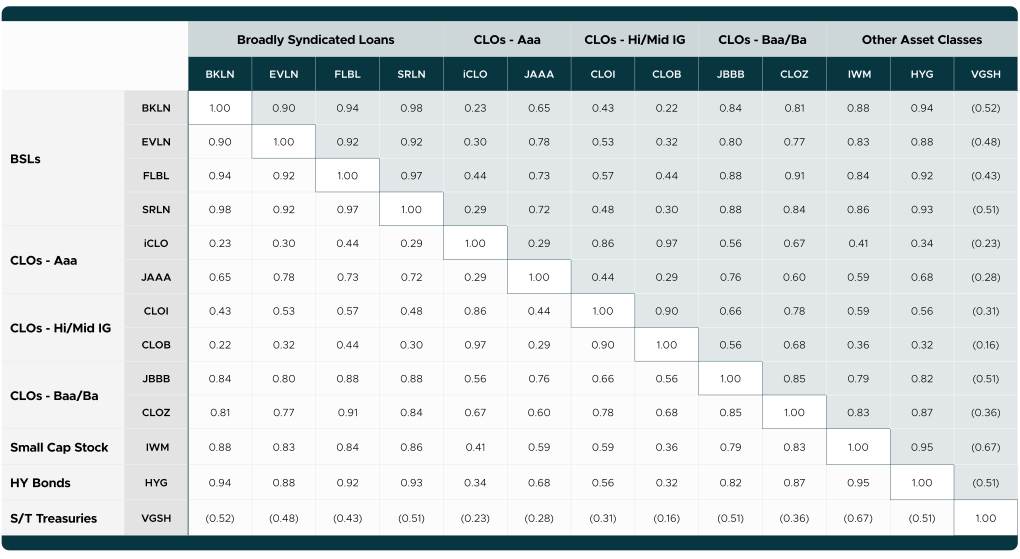
As previously explained, we defined the ‘volatile’ period to be the month of April 2025, a period of significant market volatility. Exhibits 4 through 6 show the various historical return statistics for the ETFs during this period.
One can immediately notice the significant jolt in the related risk statistics for all ETFs and the correlations among them. Below are some noteworthy observations based on the comparison of risk statistics between the two periods.
CLO ETFs experienced the largest increase in risk measures, measured both by volatility (4x to 11x increase) and the range of daily returns (1.5x to 4x higher).
BSL ETFs experienced roughly a 4x increase in volatility and about a doubling of the range of daily returns.
Traditional ‘risk’ asset categories of high yield corporate bonds and small cap stocks did not show as much of a relative increase as the BSLs and CLOs – a relatively modest 2x increase in volatility and a 50% increase in range of daily returns. These asset classes, albeit riskier as they are typically subordinated relative to BSL, are more liquid and established markets. For the short-term Treasury ETF, the risk performance in April 2025 was relatively indistinguishable than during the ‘normal’ period.
With respect to correlations, our observations show a sharp increase. Whereas during ‘normal’ times, correlations are not meaningfully significant, this changed during ‘stressed’ markets – half of the observed correlations are now assessed to be Strong and Very Strong (11 of the 22 observations) whereas 3 of the 22 are now Weak/Very Weak.
While correlations increased substantially, there were still some areas of divergence in performance that are worth noting. For example, the CLO ETFs such as the higher rated investment grade CLO ETFs show moderate correlations to all other asset classes. This implies that CLO ETFs may offer some diversification benefits (especially as you move up the capital structure associated with greater credit enhancement) even in stressed markets. However, the CLO ETFs with lower-rated tranches did show very strong correlations to the ’risk’ assets, but that is to be expected given their tranches’ higher degree of credit risk exposure associated with lower levels of credit enhancement.
A detailed attribution analysis of the underlying CLO ETF performances is outside the scope of this paper. However, we performed some high-level reviews of the CLO portfolios to look for potential factors that could affect the performance of the CLO ETFs and help explain some of the correlation behavior CLOs experienced, especially during the ‘volatile’ period as CLOs appeared to exhibit lower intra and inter correlations than the other asset classes.
Additional factors beyond market considerations appear to emerge when we look closer at the CLO portfolios. In addition to diverse capital structure exposures, we observed that the CLO ETFs had relatively diverse CLO vintage exposures. While exposures to common asset managers across the CLO ETFs could be significant, we noticed that the exposures were often across various CLO vintages of common managers.
Investing across CLOs with unique asset managers can provide diversification benefits despite targeting the BSL market. Different managers may have varying investment styles, strategies, size (or AUM), as well as industry/sector and credit expertise.
Notwithstanding the fact that a CLO portfolio may consist of several CLOs managed by the same entity, there can be advantages from diversifying across vintages. CLOs can be executed under different market conditions and potentially with variations in reinvestment criteria, even given identical CLO portfolio managers. Furthermore, CLOs from different vintages may be at various stages in their lifecycle, such as the reinvestment or amortization period, which also affects the level of a CLO’s reinvestment activity, as well as being past their non-call period, which can indicate the degree of potential refinancing activities.
Conclusion
ETFs composed of CLOs, with underlying BSLs, have experienced significant growth in recent years. While retail investors had access to funds of BSLs for over 30 years, the first publicly traded CLO ETF was introduced in 2020. This is noteworthy since a large part of the BSL market is held by CLOs and thus offers a broader group of investors to participate in the BSL-derived market across various risk/return profiles.
This paper analyzed the performance of CLO ETFs based on a sample of historical returns. The sample included different ETFs that target a range of CLO tranche seniorities, representing varying levels of credit risk. The performance of some BSL ETFs was also reviewed since the performance of a CLO tranche is essentially derived from its underlying BSL portfolio.
Our analysis of the historical daily returns and correlations of the ETFs show that over a longer ‘normal’ period, co-movements in performance are moderate and the risk/return characteristics across the ETFs are generally consistent with their underlying risk profile. However, CLO ETF returns and correlations can exhibit a noticeable divergence in performance and increase in volatility over a shorter period of extreme uncertainty. An example of which was during the recent period of market fluctuations caused by the US tariff announcements.
We also found that CLO correlations can be explained further by key factors such as the distribution of exposures to: (1) seniorities of the CLO tranches, (2) the vintage periods of when the CLOs were issued, and (3) asset manager overlap within a CLO ETF portfolio.
The bottom line is that CLO ETFs appear to offer investment diversification benefits and that not all CLO ETFs are the same, even given similar credit risk. While performance may appear to converge during stressful times, key differences in performance is also evident.
[2] Although some of the CLO ETFs may report CLO tranches that are “not-rated”, this is not technically correct in all cases since some ETFs generally report ratings only from the two largest and widely recognized NRSROs. Nonetheless, “non-rated” tranches may still be less liquid and more volatile given the absence of a rating from one of the two largest NRSROs, but likely to offer higher yields.
Keynote interview
Fit for the future
Michael Janiszewski shared his insights in December’s PEI Perspectives report about what tools, technologies and support GPs and LPs will need to set them up for 2025.
Michael Janiszewski
Chief Operating Officer
December 5, 2024
Interview
How important is a manager’s operating model to its fundraising success in today’s market? To what extent has this changed and why?
Private markets assets under management have more than trebled to $14.5 trillion over the past decade, according to analysis by Bain & Co. In a climate of increased competition, LPs are placing a growing emphasis on private markets firms’ operating models.
This is in part because LPs have substantially larger pools of capital invested in private markets today. As a result of these larger exposures, they are leaning towards managers with robust operating models in order to limit the downside risk.
At the same time, managers with best-in-class operating infrastructure are better positioned to collect, analyze and harness data to improve deal origination, execution and portfolio company performance. Of course, dealmaking will always remain the core priority for managers, but GPs have come to realize that back-office capabilities and operating models can contribute to front-office success and play an important role in supporting future fundraising.
What areas are LPs scrutinizing in particular? What are the must haves and the red flags for investors doing their due diligence on operating models prior to committing to a fund?
Investors are certainly demanding more when it comes to reporting, compliance and technology. Having the right bespoke operating model in place puts GPs in a better position to differentiate their firms through speedier, more detailed, value-add reporting to investors. In addition, LPs are looking to interact with their GPs in a more digital and data-driven manner, gaining access to information about investments in new and deeper ways.
As well as supporting fundraising, how else can fit-for-purpose, future-proofed back-office infrastructure support front-office activities?
A rigorous back-office capability is essential for GPs who want to offer more co-investment opportunities, take advantage of the liquidity offered through NAV financing, or are considering GP led deals that require solid accounting and reporting frameworks. These are all inherently data-driven activities, which means that the way in which they will ultimately be delivered will be through the use of technology.
What role is technology playing in supporting the modern private equity operating model more generally, and what opportunities does this present?
Technology is undoubtedly playing an ever more important role across the private equity industry. This initially played out in the back office, with various types of financial statement reporting, cash management solutions, as well as workflow and case management tools coming to the fore. Then, in the middle office, we started to see a focus on fund performance and portfolio monitoring, with information being collected across asset classes to support risk management and sophisticated reporting.
Finally, in the front office, technology is now being used to support investment and diligence processes, as well as investor relations. What I think is particularly new and exciting is the proliferation of specialist private markets tools that we are able to leverage today. This is in complete contrast to what was available a decade ago.
It used to be that if an alternatives manager was looking at an aircraft lease, for example, we would have to adapt that into the fund accounting system in the form of some sort of bond. That is no longer the case. Technology now has the language of alternative investing built into it, enabling us to provide different views on risk, better access to data to support superior decision making, and allowing LPs to actively monitor their investments.
The other area where we are seeing significant changes, and where development is primarily driven by LPs, is an enhanced digital experience. It’s still early days, but we are seeing generative AI being used to answer client queries, to leverage large knowledge bases and to respond to requests for proposals. Then, from an operational perspective, optical character recognition is being widely used to make tasks that were historically manual more automated.
Looking ahead, I cannot think of a single operational function where we won’t be using some sort of AI to either extract or manage information differently, or to start drawing conclusions based on that information to support reporting or decision-making, at some point in time.
However, the focus should not just be on AI, but automated machine learning as a whole the process of taking upstream and downstream data and standardising it – given the sheer volumes of financial documents that come into play.
To what extent is artificial intelligence being integrated into digital solutions?
Technology is being used to create great UI, visualization and mobile access, for example. A wide variety of digital interactions – from something as simple as getting a K-1 in the US to performance analysis, cashflow fore[1]casting and benchmarking – have all become, if not the norm, then certainly the expectation for investors. Alternatives have become a much more digital and data-driven industry.
Is the rapid adoption of technology also creating challenges?
I would say the biggest challenge for managers involves data management. While we have made great strides in systems that speak the language of alternatives, we are nonetheless faced with significantly increased demands from clients – both GPs and LPs – when it comes to managing that data. Of course, the cloud has helped us a great deal in that regard, but there is still a lot of hard work involved in operationalizing data that has historically been manually inputted into spreadsheets. Finding ways to ensure that data can be accessed and analyzed in sophisticated ways is something that will certainly be enabled by technology, but there is still some way to go.
The service that an administrator provides reflects directly on the manager. It is a reputational issue for GPs, and therefore for LPs too. LPs are looking to interact with their GPs in a more digital and data-driven manner.
How are all of these developments impacting the decisions that managers are making around what to outsource and what to keep inhouse, and how are third-party providers responding?
Rather than investing large amounts of capital into ever-expanding back-office teams and technology, managers are increasingly working with third-party administrators in order to benefit from the scale, cost advantages and specialized back-office focus. This enables managers to instead invest capex into their core business of dealmaking. In response, fund administrators are evolving their offering from the provision of basic outsourced fund accounting services to providing technology best practices, together with support for managers to enable effective implementation and harness technology in modular operational models.
What is particularly exciting for us is that we are receiving a lot of inbound interest regarding solutions to many of the challenges that I have described. Those enquiries sometimes center on the use of data to support better investment decision-making, for example, or the need to provide different types of information to end clients.
The focus can also be on improving the manager’s cost profile. In short, managers are looking to third parties to fulfil functions that they either can’t or don’t want to invest in at the level that an external provider can. Another driver, meanwhile, is the desire from managers to partner with organizations that are able to glean insight and experience from working with market participants across the entire industry.
As a result, third-party administrators are being approached not only as outsourced service providers but as accelerators for the strategies that their clients are trying to implement.
Is the choice simply between insourcing and outsourcing, or are other models emerging?
Co-sourcing is certainly a trend. That is something that managers are talking to us about and it is something that we have the flexibility to implement. However, I would add that most of those conversations are followed by questions about what our plans are as a third-party administrator to provide some of those functions in a fully out[1]sourced manner.
Co-sourcing is typically seen as a step on the journey towards outsourcing.
What questions should LPs be asking of a potential outsourced provider?
Operational excellence is, of course, incredibly important in this space, because the service that an administrator provides reflects directly on the manager. It is a reputational issue for GPs, and therefore for LPs too. Other sources of differentiation among third-party providers include the degree to which these organizations are investing in their own core systems and operations in order to take advantage of industry trends. GPs should also select an expert partner with firsthand experience in managing processes across multiple strategies and different investment vehicles.
An understanding of cross-jurisdictional knowledge is also vital, should they wish to expand investment beyond their regional boundaries. In addition, LPs should consider the extent to which administrators are investing ahead of the curve, thinking about the next wave of innovation, whether that be generative AI, sophisticated data management or the provision of different ways for LPs to access information.
That kind of forward-thinking approach can help put managers on the front foot when fund[1]raising, and give LPs the comfort that operations are being well run by experienced industry specialists, and that it can scale as their firm grows.
What is your number one piece of advice for a manager re-evaluating its existing operating model with the intention of building something that is sustainable and that will allow it to scale?
My number one piece of advice would be to take time to review the market. I would add that it is also important to understand that the role of the fund administrator has changed.
Today, the right outsourced partner can provide operational support from back-office accounting, all the way through to client services, thereby enabling firms to focus on their own value proposition in a very different and much more sophisticated way.
Chief Operating Officer, Mike Janiszewski spoke to PEI Fund Services report about the value of outsourcing administrative functions to respond to the increased market demand from individual investors. Get in touch to partner with a proven third-party provider to harness this potential.
Mike Janiszewski
Chief Operating Officer
June 4, 2024
Mike Janiszewski, Chief Operating Officer, spoke to PEI Fund Services report about the value of outsourcing administrative functions to respond to the increased market demand from individual investors. With about half of global assets under management (AUM) held by individuals, private fund managers are keen to tap into this vast potential. Large asset managers, like Blackstone, have ambitious goals for increasing their retail capital offer. However, accommodating individual investors in alternatives, presents significant complexity- complicated structures, dealing with varying regulations, individual tax burdens and increasing back-office administration.
Mike opined that “Taking on investment from private wealth investors will require a step-change in middle- and back-office infrastructure” Private markets have responded to this already and multiple investment structures are being adopted to accommodate the differing needs of individual investors, as well as new distribution channels and digital platforms. At AD, we have been specializing in this for the past 20 years; delivering for our clients via a combination of jurisdictional, technological and administrative expertise.
Ultimately, leveraging technology for automation and data streamlining must come alongside partnership with third-party providers who can harness new tools for great success. Reach out to to find out more.